Why Do I Feel Bloated? How Lymphatic Drainage May Help
Your stomach feels tight by afternoon. Your rings feel snug. Your jeans fit fine in the morning and dig in by dinner. Bloating hits most women at some point, and the causes vary widely.
This guide breaks down the two main types of bloating, explains how your lymphatic system moves fluid through your body, and looks at what lymphatic drainage for bloating actually does. You'll also learn when bloating signals something that needs medical attention.
What causes bloating?
Bloating means your abdomen feels full, tight, or swollen. The causes fall into two broad categories: digestive and fluid-related.
Digestive bloating comes from gas building up in your stomach and intestines. Common triggers include:
- Eating too fast or swallowing air while chewing gum or drinking through a straw
- Carbonated drinks
- High-fiber foods introduced too quickly, such as beans, cruciferous vegetables, and whole grains
- Food intolerances, including lactose or gluten sensitivity
- Small intestinal bacterial overgrowth (SIBO)
- Constipation, which slows digestion and traps gas
Fluid-related bloating works differently. Instead of gas in your gut, excess fluid collects in your tissues. Hormonal shifts, high sodium intake, prolonged sitting or standing, and poor circulation all contribute to this type of swelling, according to the Cleveland Clinic.
Water retention vs digestive bloating
These two conditions feel similar but show up differently, and telling them apart matters for finding relief.
| Signal | Water retention | Digestive bloating |
|---|---|---|
| Location | Abdomen, legs, ankles, hands, face | Mainly abdomen |
| Timing | Builds over the day, worse with heat or long periods of sitting | Worse after specific meals |
| Feel | Puffy, sometimes leaves a slight indent when pressed | Tight, gassy, sometimes painful |
| Cycle-related | Common in the week before a period | Not tied to hormonal cycle |
| Relief | Movement, hydration, reduced sodium, lymphatic support | Dietary changes, digestive enzymes, time |
Women notice water retention most around ovulation and the days before menstruation, when estrogen and progesterone shift fluid balance. Pregnancy, birth control, and menopause also change how your body holds onto fluid.
Digestive bloating, on the other hand, tracks closely with what you ate and when. It often resolves within a few hours.
Read more about how pressotherapy supports circulation in our guide to the BOA MAX Lymphatic Drainage Suit.
How the lymphatic system works
Your lymphatic system runs alongside your circulatory system. Blood vessels deliver nutrients and oxygen to your tissues. The lymphatic system collects the leftover fluid, along with waste products and immune cells, and routes it back toward your heart through a network of vessels and lymph nodes.
Unlike your circulatory system, the lymphatic system has no central pump. It relies on muscle movement, breathing, and gentle external pressure to keep fluid flowing. Sitting for long stretches, wearing tight clothing, recovering from surgery, or living with a sedentary routine all slow this flow down.
When lymph flow slows, fluid pools in your tissues instead of draining. That pooling shows up as puffiness, heaviness, and a bloated feeling, particularly in your abdomen, legs, and face.
Can lymphatic drainage reduce fluid retention?
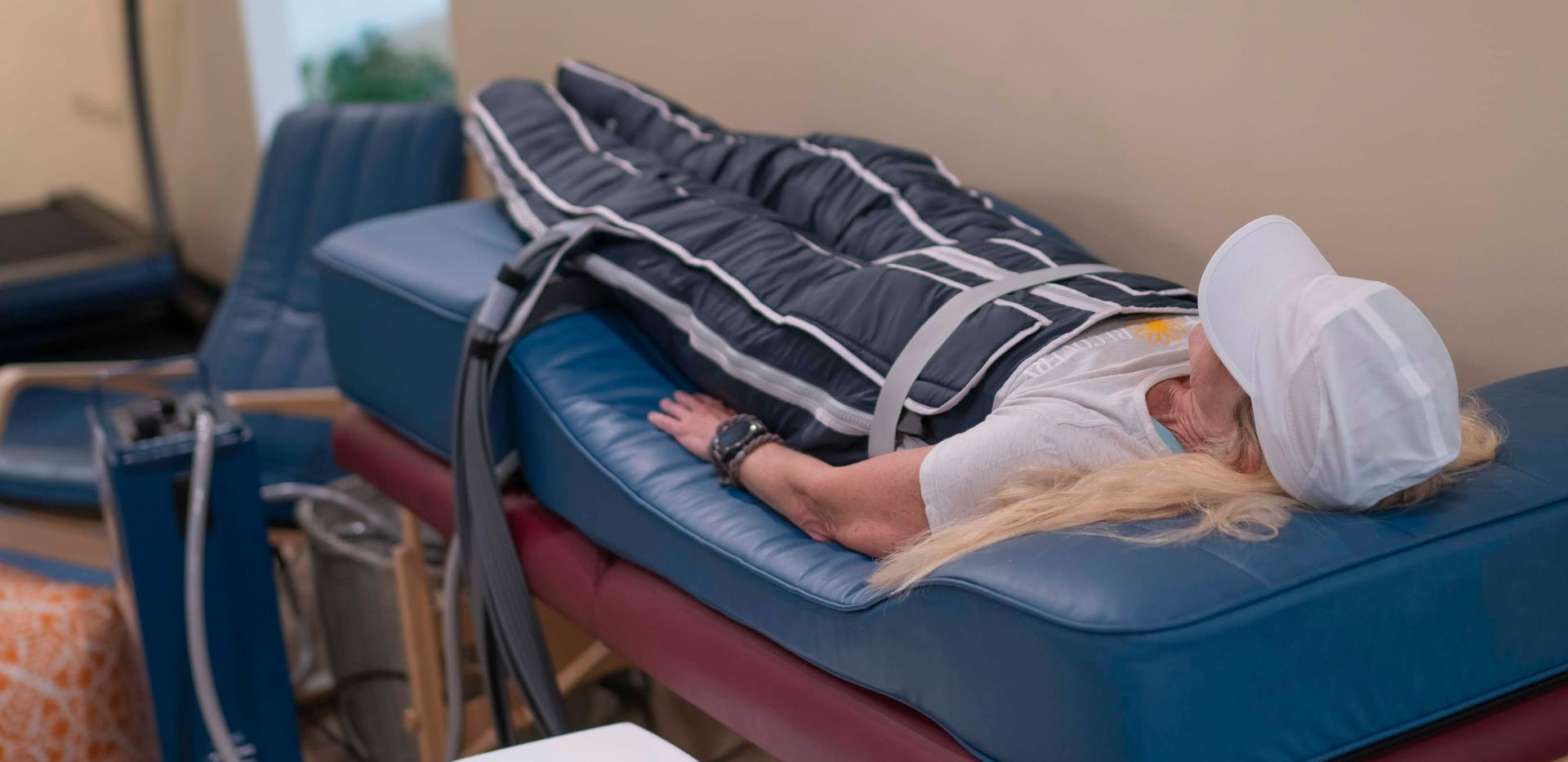
Lymphatic drainage is a gentle, rhythmic technique designed to encourage fluid movement through your lymphatic vessels toward your lymph nodes. Manual lymphatic drainage massage and pressotherapy devices, like compression suits, both use this same principle: light, repeated pressure that mimics your body's natural pumping action.
The strongest evidence for lymphatic drainage comes from clinical settings. It's a core part of treatment for lymphedema after cancer surgery and post-surgical swelling, where trained therapists track measurable fluid reduction over a course of sessions, as outlined by Healthline.
For everyday bloating and fluid retention, the research base is smaller, but the mechanism holds up. Sessions support fluid movement out of swollen tissue, ease the heavy feeling that comes with hormonal water retention, and pair well with movement, hydration, and reduced sodium intake. Lymphatic drainage works best as one part of a broader routine, not a standalone fix.
At Swift Recovery, our BOA MAX Lymphatic Drainage Suit uses sequential pressotherapy to apply that same rhythmic compression from your feet up through your torso, supporting circulation and fluid movement in a single session.
When to seek medical care
Occasional bloating after a big meal or during your cycle is normal. Some patterns are not, and deserve a visit to your doctor:
- Bloating that lasts more than a few days without relief
- Sudden, severe swelling in your legs, hands, or face
- Bloating paired with unexplained weight loss, fever, or severe pain
- Swelling that's asymmetrical, appearing in one leg or arm but not the other
- A history of kidney, liver, or heart conditions, since these organs regulate fluid balance
- Bloating alongside changes in bowel habits that persist for weeks
These symptoms point toward conditions that need diagnosis and treatment beyond massage or lifestyle changes. Lymphatic drainage supports fluid balance. It does not replace medical evaluation.
Who benefits most?
Lymphatic drainage for bloating tends to help specific groups more than others:
- Women dealing with cyclical water retention tied to their menstrual cycle
- People recovering from surgery, with a doctor's clearance to begin sessions
- Anyone with a desk job or long commute, where hours of sitting slow circulation
- Athletes managing post-workout swelling and soreness
- People traveling frequently, since long flights and car rides reduce lymph flow
- Individuals managing mild, chronic swelling in the legs or ankles
If your bloating traces back to gas, food intolerance, or digestive irregularity, dietary changes and digestive support address the root cause more directly than lymphatic work.
FAQ
How often should I get lymphatic drainage for bloating?
Most people notice the best results with sessions once or twice a week during periods of heavy fluid retention, tapering to a maintenance schedule of every few weeks.
Is lymphatic drainage massage painful?
No. The technique uses light, gentle pressure. It should feel relaxing, not painful.
How fast will I see results?
Some people notice reduced puffiness immediately after a session. Lasting improvement in chronic swelling usually takes several sessions combined with hydration and movement.
Can I do lymphatic drainage at home?
Simple self-massage techniques and dry brushing support lymph flow between professional sessions, though a trained therapist or pressotherapy device delivers more consistent results.
Is lymphatic drainage safe during pregnancy?
Many pregnant women use lymphatic drainage for swelling in the legs and feet. Check with your OB first, and work with a therapist trained in prenatal techniques.
Ready to feel less bloated?
Bloating has more than one cause, and the right relief depends on which type you're dealing with. If fluid retention is behind your discomfort, lymphatic drainage offers a supportive, non-invasive option backed by decades of clinical use in swelling management.
Contact Swift Recovery in Huntsville to book a lymphatic drainage session and build a recovery plan around your body's needs.